Licence · 粤卫消证字[2023]-07-第0002号·valid to 21 May 2027 (Disinfection-product hygiene licence)
R&D
What we can develop.
A claim on your label has to survive someone else's QA team — and most suppliers cannot show you the file that proves it. Our ISO 22716 GMP workshop in Heyuan, Guangdong runs 6 production lines for 20 private-label SKUs. The team is 8 in-house chemists (5 MSc, 3 BSc), plus 2 regulatory specialists and 2 SCUT PhDs. The batch reject rate so far in 2026 is 1.2%. 10 third-party laboratory reports are published on this site — 7 from GDDCM and 3 from NACC — covering 8 of the 20 catalogue SKUs, all issued by CMA- and CNAS-accredited laboratories.
- third-party reports
- 1010 laboratory reports from GDDCM and NACC
- employees
- 220220 employees, including 8 in-house chemists
- years exporting
- 6exporting since 2020
- production lines
- 66 production lines
The formula is developed and tested by eight in-house chemists, two of whom hold doctorates from South China University of Technology. Our joint laboratories with SCUT and Guangdong University of Technology sit behind the hard cases. A six-step QC process stands behind the formula, so a claim on your label is a claim we can defend with a document.
A full custom formula and a lab sample take 30–45 days. Stability and compatibility testing is a scheduled programme that runs in months, not weeks, and it is quoted separately. It is not something a calendar can shorten, and it needs at least 1,000 sets to be worth running. Samples are chargeable: the fee is confirmed in the quotation and freight is paid by the buyer. A sample of a catalogue SKU ships in 5–7 days.
- In-house chemists
- 85 MSc · 3 BSc
- SCUT PhDs
- 2cosmetic science
- QC steps
- 6IQC → OQC
- Batch reject rate
- 1.2%YTD 2026
Our R&D Workflow
From the first brief to a documented handover to production.
Requirement intake
Target claim, market, packaging and constraint set with the buyer.
Formula design
In-house formulation work in the joint labs.
Bench sampling
Lab samples ship within 7–10 days of brief confirmation.
Stability & safety
Stability and compatibility testing before anything is quoted as final.
Sample confirmation
Buyer signs off on the sample, or we iterate.
Tech transfer
Documented handover to production under NDA.
What you decide, stage by stage
Six stages, and the one thing that has to be settled at each.
Brief and feasibility
- You decide
- Which products, which destination market, and roughly what volume you are planning for.
- We do
- Tell you which of the existing catalogue formulas is closest to what you want, and which parts would need development. A custom formula is not automatically the better choice — for a buyer who has not tested a market, a proven catalogue formula with your label is usually the faster and cheaper way to find out.
- Where it stalls
- Sending a target retail price without a volume, because the minimum and the price depend on each other and neither can be settled first.
Formula path
- You decide
- Ours or yours. A catalogue formula with your packaging, or a formula developed for you.
- We do
- For a catalogue formula, quote against the existing base. For a development programme, scope the work: formulation, sample, stability and the filling run, with the cost and time confirmed against the brief.
- Where it stalls
- Expecting a development programme to cost the same as a private label on a stock formula. They are different projects with different risk.
Packaging and artwork
- You decide
- Bottle, label, box, colour, and the copy in every language the destination requires.
- We do
- Supply or recommend the format, produce 3D renders before tooling, and check the artwork against the destination market requirements before it goes to print.
- Where it stalls
- Artwork arriving after the tooling is ordered, which is the most common cause of a slipped launch date.
Sample and approval
- You decide
- Whether the sample matches what you expected.
- We do
- Produce samples against the agreed brief and iterate on what does not.
- Where it stalls
- Approving a sample and then changing the formula afterwards. Approval is the point at which the specification is fixed; changes after it are a new project.
Production
- You decide
- The quantity, which must meet the confirmed minimum for that configuration.
- We do
- Schedule the filling run, produce against the approved sample, and sample each batch for release.
- Where it stalls
- A quantity that meets the minimum spread across many SKUs rather than concentrated in fewer. Twenty-five hundred units across ten SKUs is a different order from the same total in three.
Documentation and shipment
- You decide
- The destination, the freight method and the payment terms.
- We do
- Ship with a batch certificate of analysis, a 16-language safety data sheet, a commercial invoice carrying the HS code, a certificate of origin, and the bill of lading or air waybill.
- Where it stalls
- Finding out the documentation requirement after the goods are packed. Destination requirements differ by market and should be settled at the brief stage.
What importing it actually involves
Four obligations that decide whether a consignment clears.
Classification
The HS code follows the product, and it decides duty rate, licensing and which regulatory body applies. Across the grooming line three codes cover the whole catalogue, but a claim-bearing product and a cosmetic product can classify differently. This is settled before labelling, not after.
Label compliance
The destination market decides the label language, the required declarations and the responsible-party arrangement. The European Union and the United Kingdom are treated as separate markets. Artwork is checked against the destination before tooling, not after.
Product registration
Most cosmetic markets require a notification or registration before sale, and the route differs: CPNP and PIF documentation for the EU, ANVISA notification for Brazil, EAC conformity for the EAEU. Preparation starts at the brief stage because registration takes calendar time the factory does not control.
Shipping documents
The commercial invoice, packing list, certificate of origin and the transport document are what actually move the goods. A certificate of analysis and a safety data sheet ship alongside them for the buyer who will need them on file.
What we will not do
Real constraints, not a disclaimer.
Retail and single-unit sales
The business is B2B. There is no retail price and no consumer channel, so a buyer planning to resell is planning on the right footing and a shopper is not.
Claims without evidence
A product that makes a health claim needs supporting laboratory data before it ships. A claim that cannot be substantiated is not something we put on a label, regardless of how competitive the market is.
Formulation for a regulated drug claim
The plant operates under cosmetic GMP. Anything that would make the product a medicinal product is outside what ISO 22716 covers, and we would say so rather than attempt it.
Very small trial quantities
A full production run is what the plant is set up for. Sample quantities are available for evaluation; a commercial trial order at a fraction of the minimum is not, because the changeover cost is the same either way.
R&D Testing & Lab Facilities
What we measure in-house, before we ship.
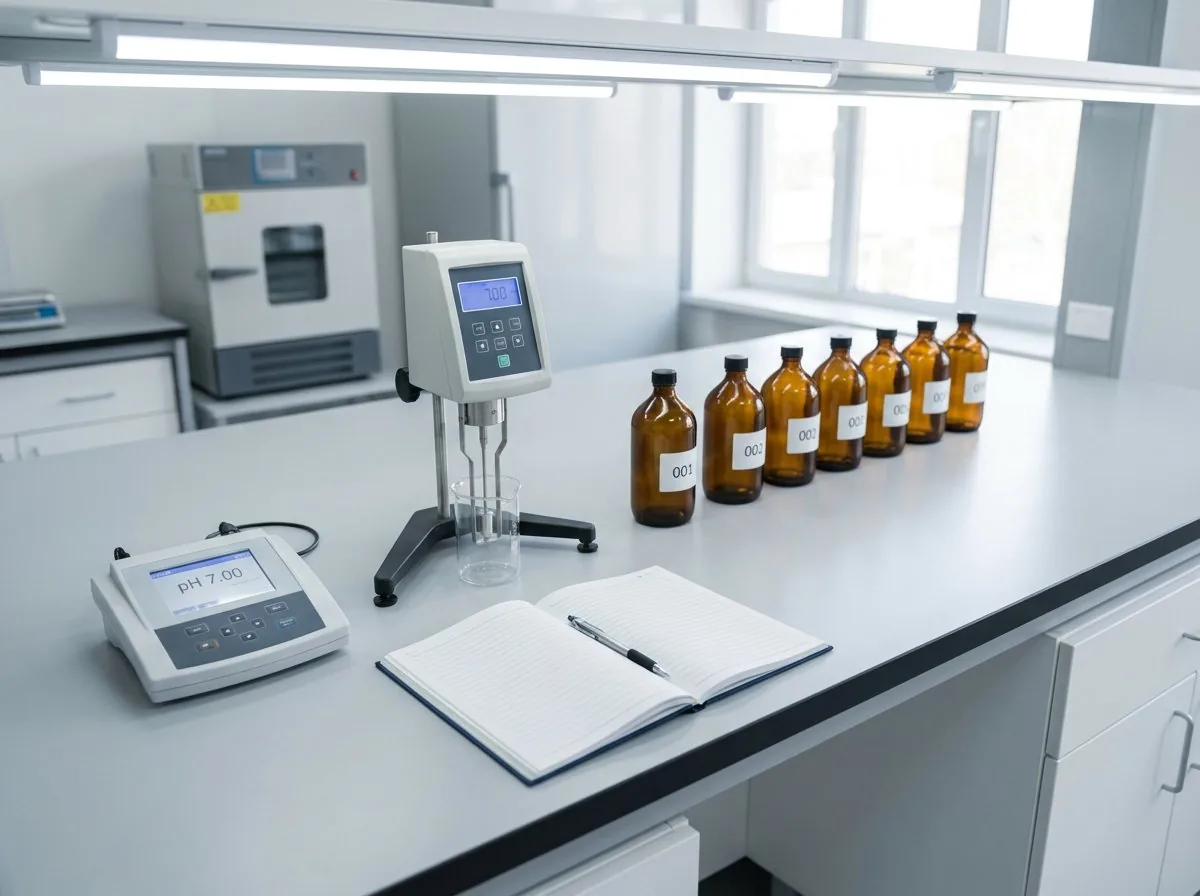
Formula & Ingredient Testing
Bench work for active content, pH and viscosity.
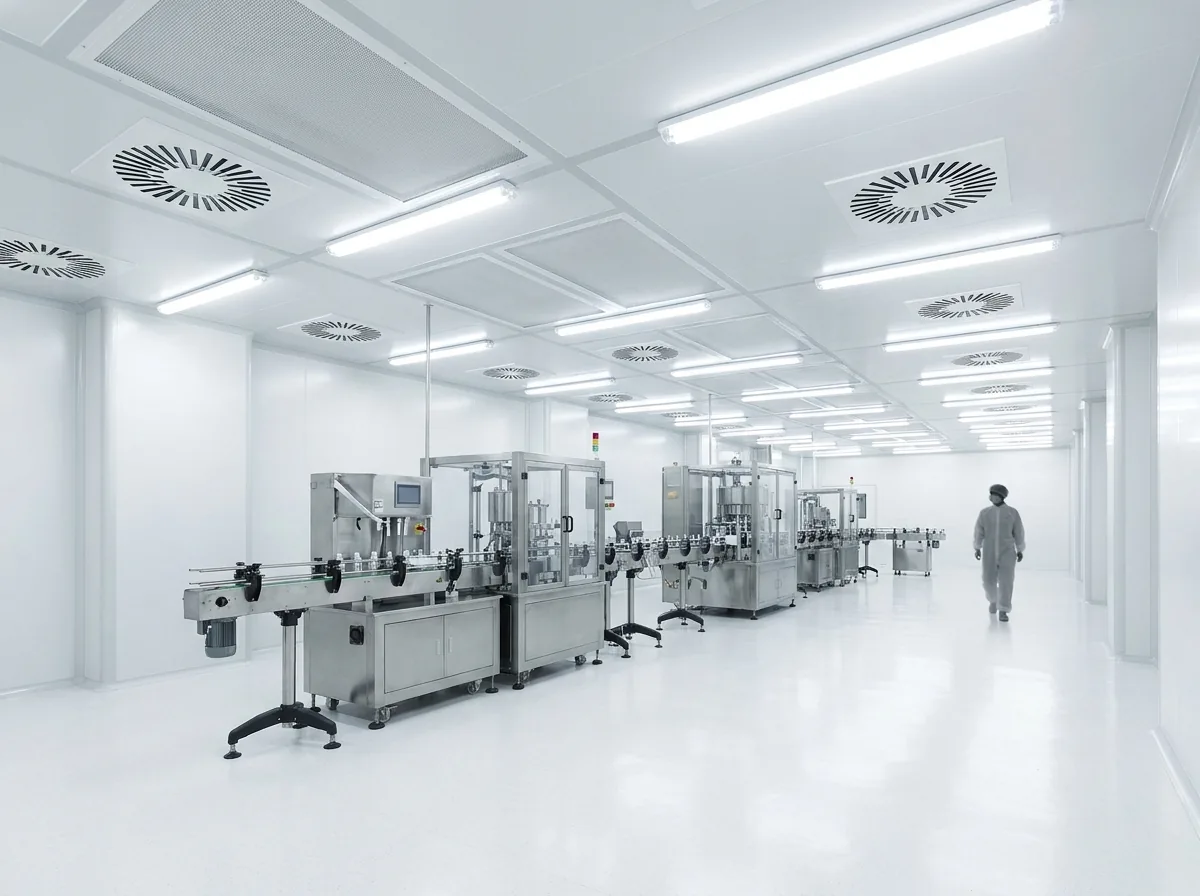
Safety & Stability Test Chamber
Stability and compatibility held before release.
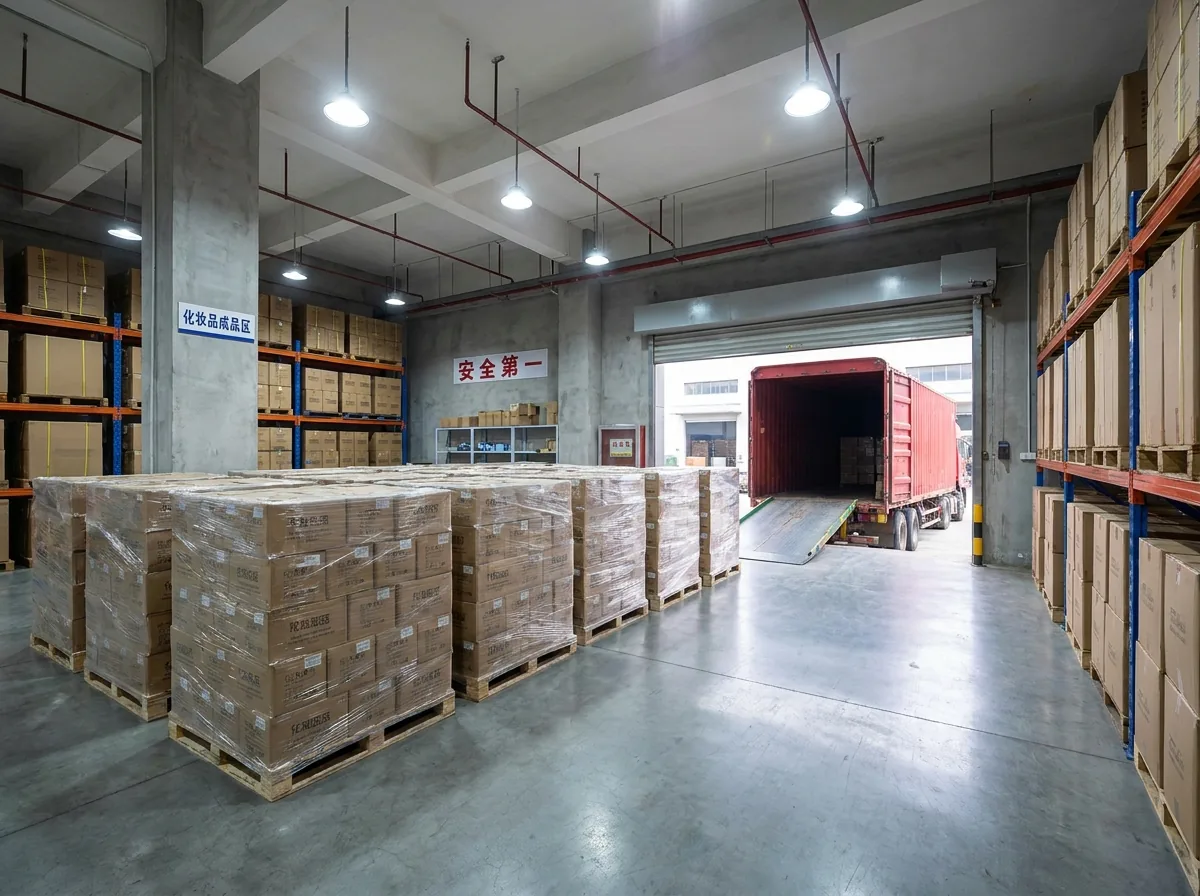
Packaging Compatibility Validation
Compatibility checked against the final pack.
R&D FAQ
R&D FAQ
Straight answers. Where the honest answer is a limit, we state the limit.
- Can you develop custom formulas for pet care products?
- Yes. Full custom OEM formulation and a lab sample run 30–45 days; stability and compatibility testing is scheduled per product and quoted separately, because it takes months rather than weeks, developed in-house, with two of our chemists holding doctorates from South China University of Technology and joint laboratories with SCUT and Guangdong University of Technology.
- How long does a new formula development take?
- 30–45 days for a full custom formula and a lab sample; stability and compatibility testing is a scheduled programme that runs in months and is quoted separately. Lab samples ship within 7–10 days of brief confirmation, so you see the first result before the full cycle closes.
- Are all lab reports available for audit?
- Yes. Every shipment carries a batch-specific COA, a 16-language MSDS, CPSR where applicable, INCI disclosure, allergen declaration, animal-testing statement and a Certificate of Free Sale. All are digitally signed and archived for ten years.
- Can you help with regulatory document preparation?
- Yes. Two in-house regulatory specialists prepare the destination-market document set, and we hold standing partnerships with SGS (Guangzhou), Intertek (Shenzhen), Pony Testing (Beijing), AMA Labs (New Hampshire) and Eurofins (USA) for export certification.
- Can you develop a formula from scratch?
- Yes, through formulation, sampling, stability and filling. The cost and timeline depend on how far the brief is from an existing catalogue formula, so both are confirmed against the development brief rather than quoted in advance.
- What is the difference between ODM and OEM?
- ODM is our formula with your label, packaging and colour. OEM can be a formula developed for you. They are different projects with different timelines and different risk, and the right one depends on whether you have already tested the market.
- Do you sign an NDA?
- Yes. An NDA is provided for OEM work. If a formula is developed for you and you want it registered as your IP, that is arranged as part of the project rather than afterwards.
- How long does stability testing take?
- It depends on the claim and the shelf life being sought, and it runs on a calendar the factory does not compress. This is the stage most often underestimated in a launch plan, which is why it is scoped at the brief stage rather than discovered during production.
- Can you match an existing competitor formula?
- We can work to a specification you provide. Whether a given formula can be replicated exactly depends on the raw materials available to us, and we will tell you at the feasibility stage rather than after development has started.
- What do you need from me to start?
- The product types, the destination market, an indicative annual volume, and your preferred format. With those four, we can say which catalogue formula is closest, what would need developing, and what the commercial structure looks like.
Submit your R&D enquiry.
Share your custom development requirement — target claim, market and volume — and get a feasibility answer, not a brochure.