Licence · 粤卫消证字[2023]-07-第0002号·valid to 21 May 2027 (Disinfection-product hygiene licence)
Factory
A 30,000 m² park, photographed.
A supplier's factory photographs are usually taken for the brochure. Every claim on this page is backed by a picture you can request at full resolution — the same one a buyer sees on an audit visit. 10 third-party laboratory reports are published on this site — 7 from GDDCM and 3 from NACC — covering 8 of the 20 catalogue SKUs, all issued by CMA- and CNAS-accredited laboratories.
- industrial park
- 30,000 m²30,000 m² industrial park in Heyuan, Guangdong
- production lines
- 66 production lines
- employees
- 220220 employees, including 8 in-house chemists
- years exporting
- 6exporting since 2020
The factory runs on a 30,000 m² park in Heyuan, Guangdong, with six filling lines and a QC lab on site, and every claim on this page is backed by a photograph you can take away at full resolution.
Monthly capacity is 300,000 bottles, which is a floor for planning and not a promise of allocation — a month can be full. Capacity, lead time and the delivery date are confirmed against your order.
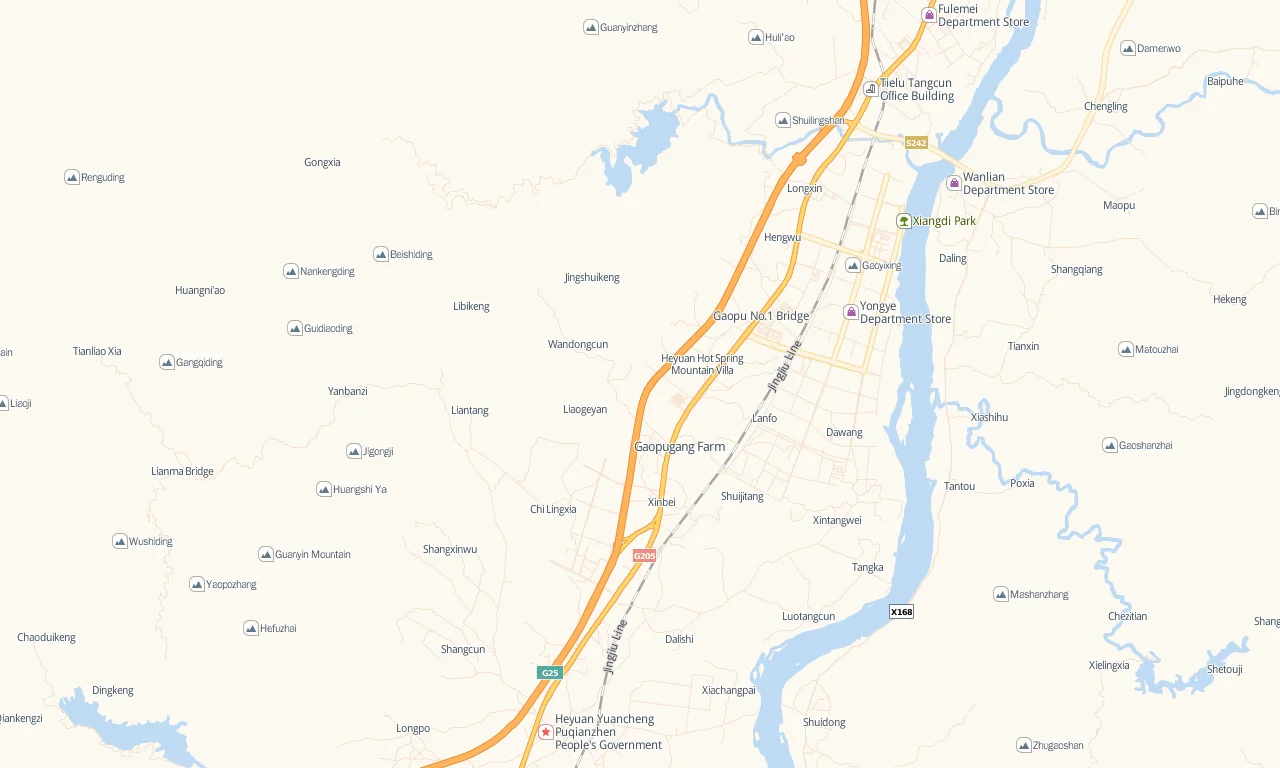
No.141-1 Longteng Road, Gaopugang, Yuancheng District, Heyuan, Guangdong, China
广东省河源市源城区高埔岗龙腾路 141 号-1
- Tel
- +86-762-3909998
- sales@shenhezhongke.com
- +86 172 6665 9928
District · z13
No.141-1 Longteng Road, Gaopugang, Yuancheng District, Heyuan, Guangdong, China
高埔岗, 源城区, 河源市, 广东省 · Map data © Amap (高德地图)
- Industrial park
- 30,000 m²3 connected blocks
- GMP workshop
- 5,000 m²class-D cleanroom
- Bottles / month
- 300Kcurrent capacity
- Employees
- 220+on-site
A working plant, on 30,000 m²
Three buildings in Heyuan, Guangdong: a 1,000 m² founding workshop, a 5,000 m² class-D cleanroom filling hall, and 3,000 m² of offices and QC. 220 people on site, full time.
- 300,000 bottles a month, across 6 production lines and 4 product lines
- On-site QC laboratory; every batch sampled before release
- 1.2% batch reject rate, year to date in 2026
- Container loading photographed at the export dock
Our Production Lines
Six production lines across four product lines, raw material to packed carton — each photograph is the line that made it.
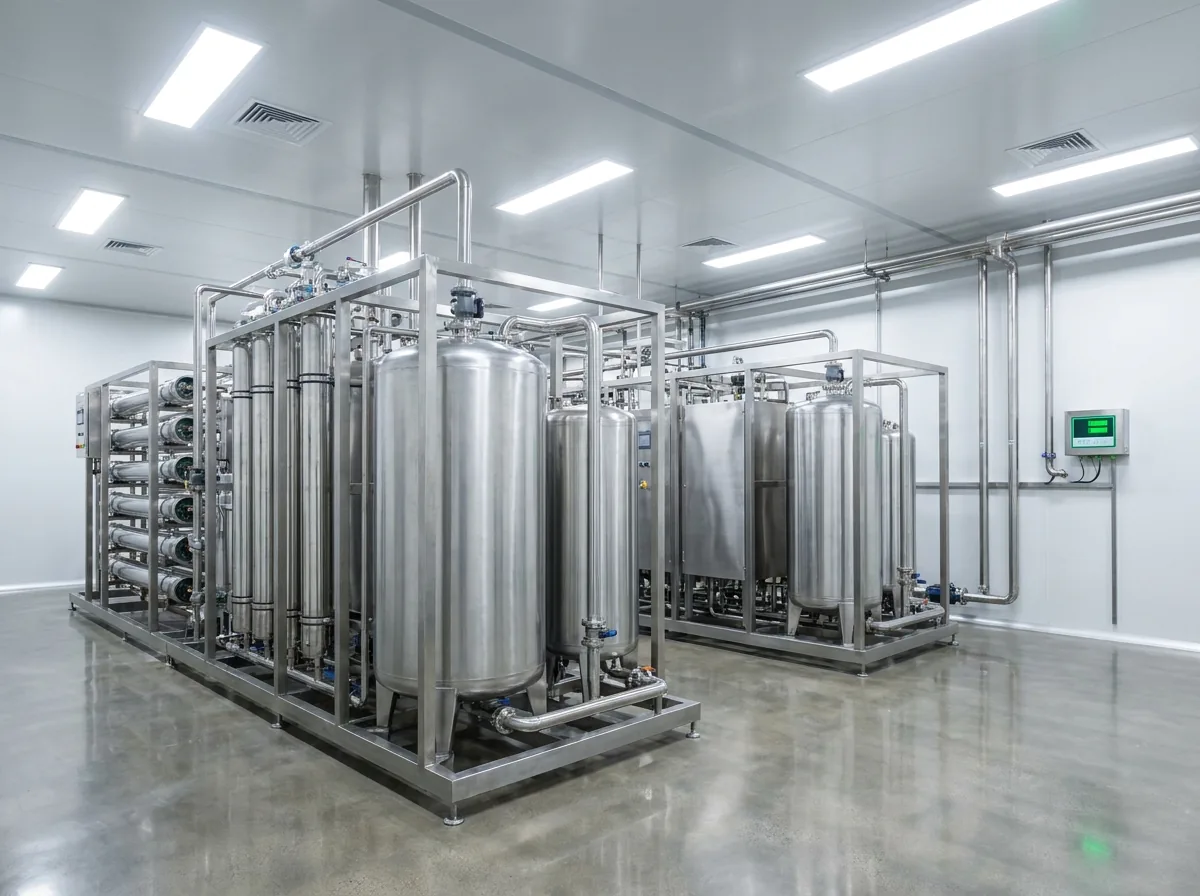
Purified water system
Every formula starts from controlled water.
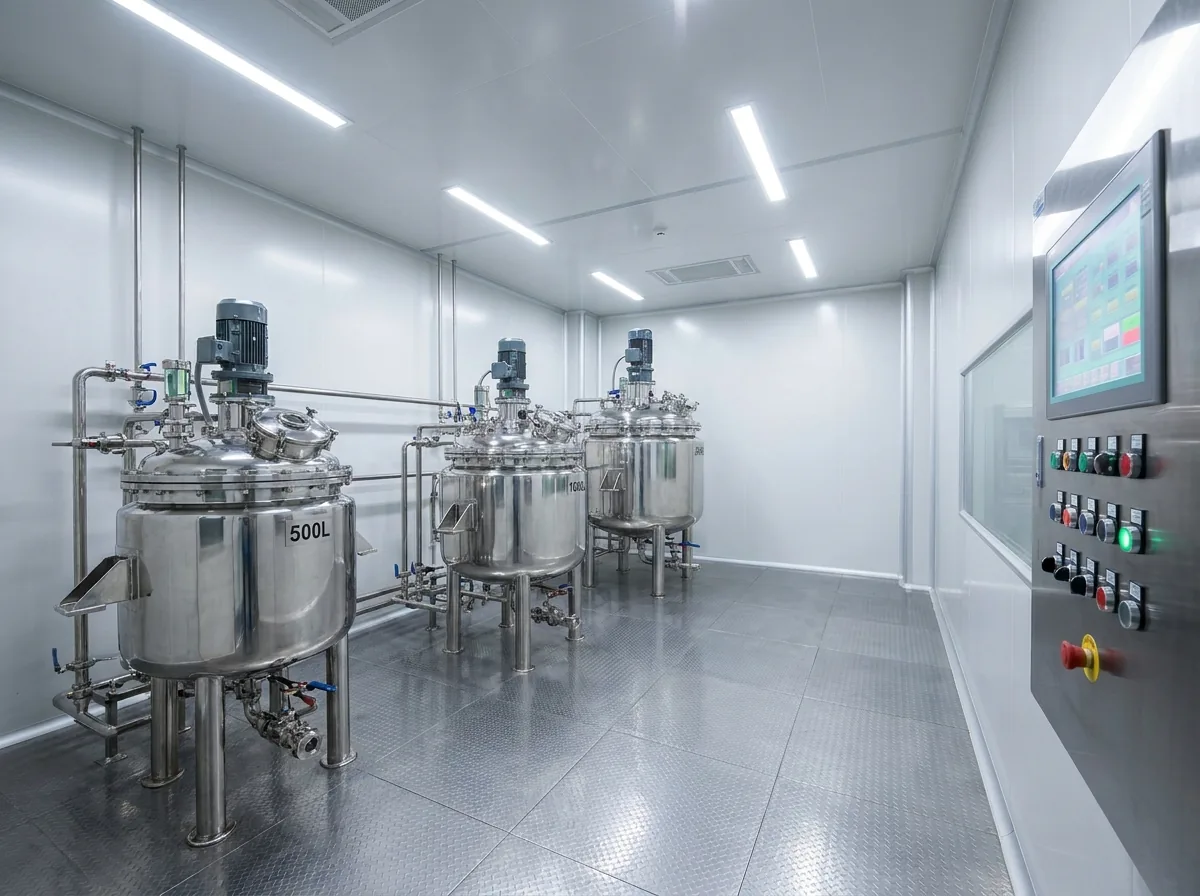
Mixing & blending
High-shear blending for consistent batches.
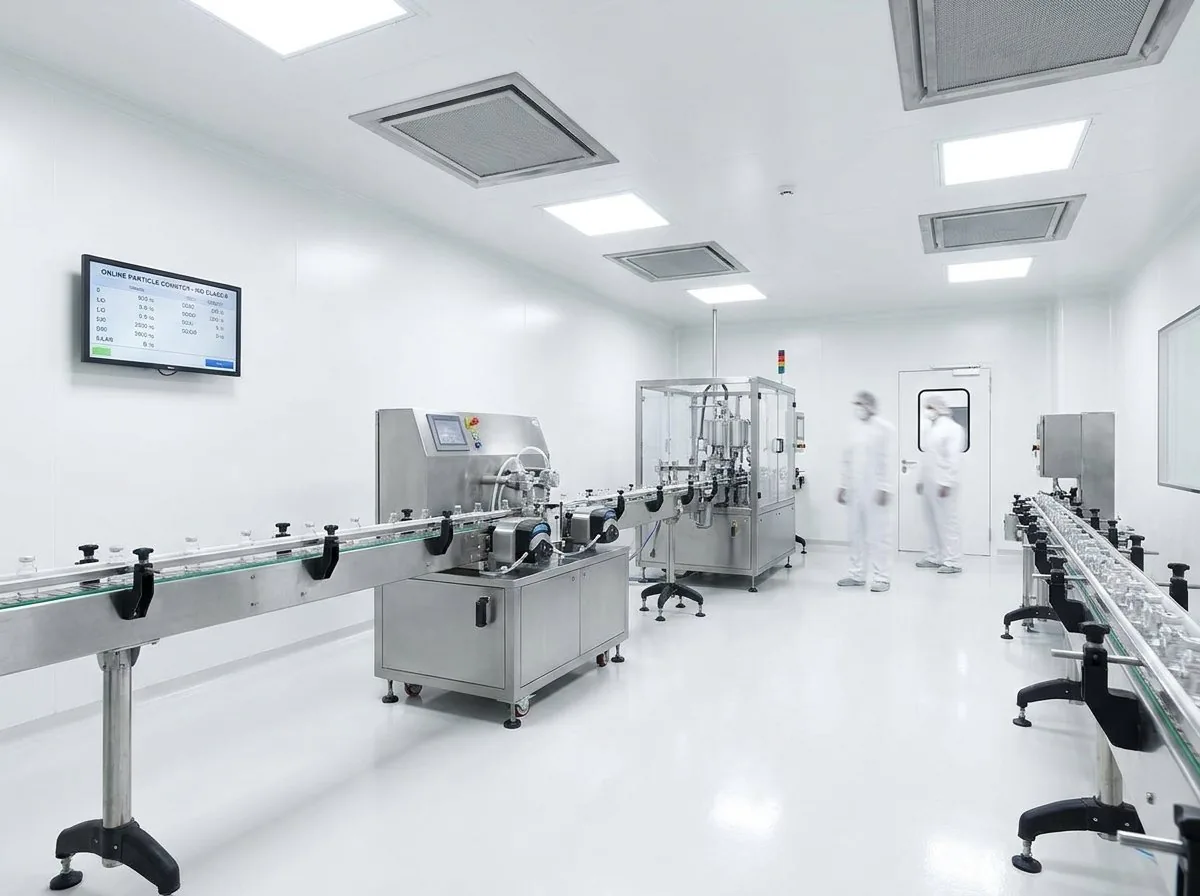
Cleanroom filling
Class-D cleanroom filling line.
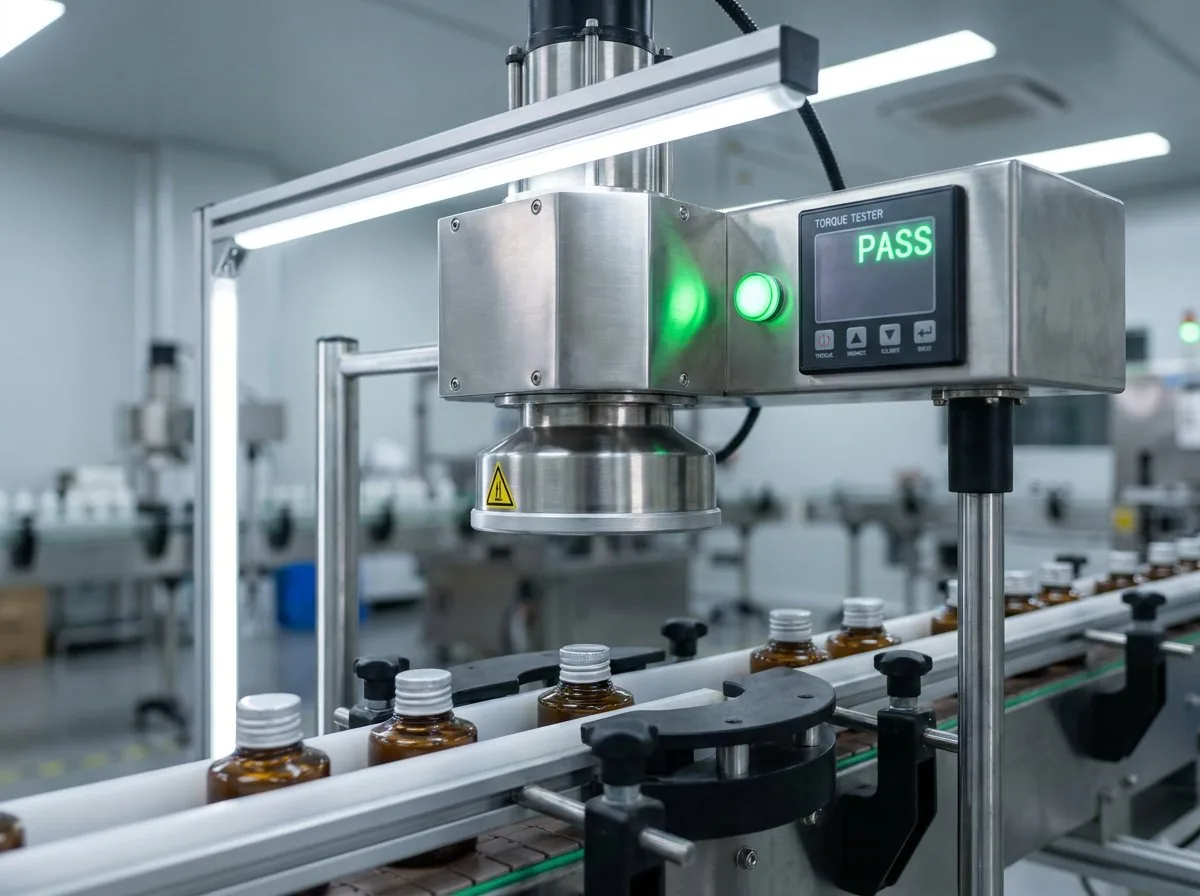
Capping & sealing
Automated capping and sealing.
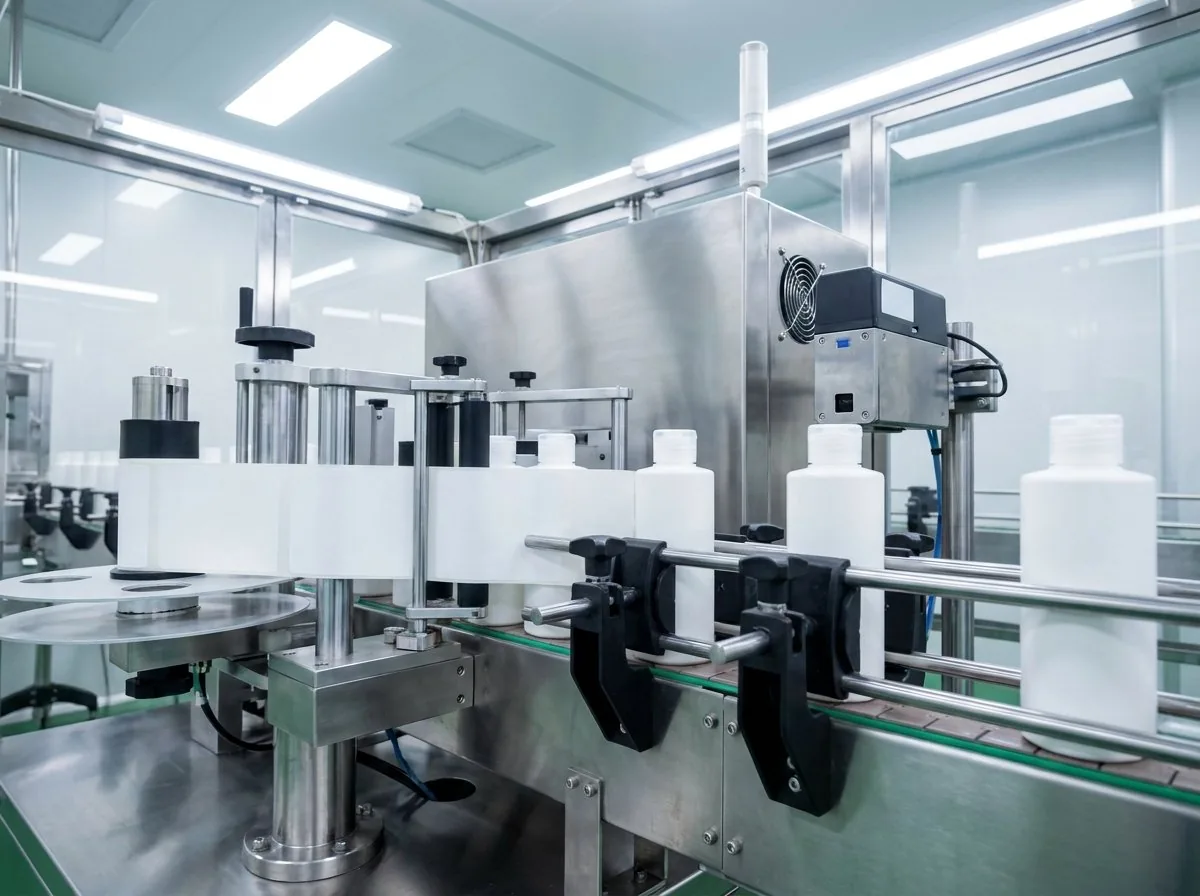
Labeling & coding
Label application and batch coding.
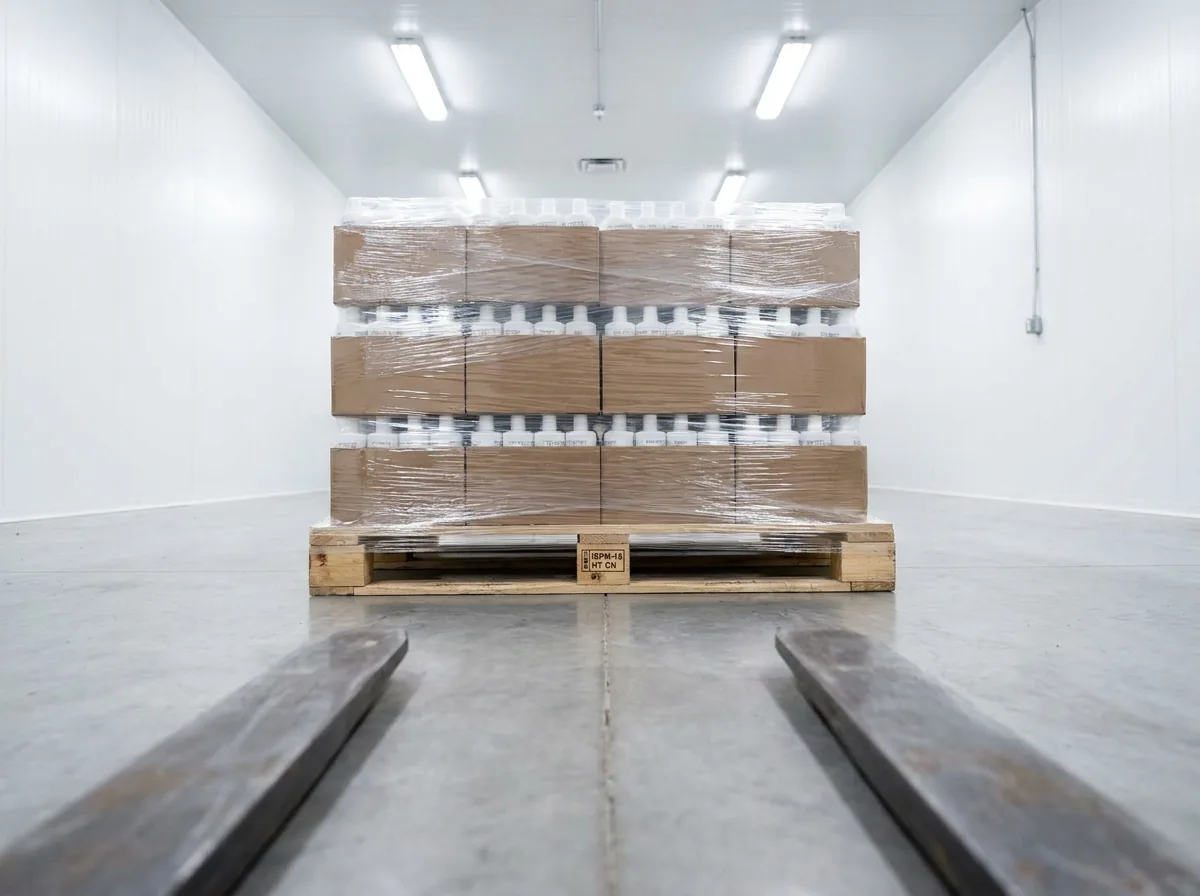
Carton packing
Carton packing for export.
The floor in numbers
The six photographs above are the lines. These are the numbers that decide whether they can take your order: the area they work in, the class of cleanroom they fill in, and how many bottles leave the park in a month.
- Industrial park
- 30,000 m²
- 3 connected blocks in Heyuan, Guangdong
- GMP workshop
- 5,000 m²
- ISO 22716 certified, class-D cleanroom
- Monthly capacity
- 300K bottles
- across 6 lines and 4 product lines
- People on site
- 220
- production, QC, documentation and export
- Carton configuration
- 12 bottles / carton
- export cartons, dimensions and gross weight on every product page
- Export experience
- 12 countries
- 5 major regions, with the documents each needs
What happens on each line, and what controls it
Purified water system
Every formula starts from water produced on site rather than bought in. A municipal or tanker supply introduces a variable that no finished-product test can correct for afterwards, because a batch made from the wrong water has already been through the whole line.
Treated in house and sampled before it enters a tank. The water is a raw material here, not a utility.
Mixing & blending
High-shear blending brings a surfactant formula to a uniform batch. The failure mode here is not a wrong recipe but an inconsistent one — a batch that is correct at the top of the tank and not at the bottom.
Batch records per blend, so a finished-product complaint can be traced back to the blend rather than only to the release test.
Cleanroom filling
Filling happens in a class-D cleanroom inside the 5,000 m² GMP workshop. This is the step that determines whether the rest of the process mattered, because it is the last point at which the product is still protected.
ISO 22716 governs the workshop. Environmental monitoring covers the filling room rather than being assumed.
Capping & sealing
Automated capping and induction sealing. Seal integrity matters more than it sounds: a shampoo that loses a percent of its volatile content in transit is a different product from the one that passed the release test.
Seal checks at the line, recorded per batch.
Labeling & coding
Label application and batch coding. The code is what ties a bottle back to its certificate of analysis, so a buyer can trace any unit to the batch it came from.
Every batch carries a code that resolves to the batch certificate shipped with the consignment.
Carton packing & export
Carton packing for export, at the loading dock. Carton count and gross weight are specified per SKU because they are what the freight quote is built on — a 12-bottle carton and a 24-bottle carton of the same product are not the same landed cost.
Carton specifications published per SKU. Loading is photographed at the dock.
Between a blend and a container
The quality path, in the order it happens.
Raw material acceptance
Incoming materials are checked against specification before they enter production. A material that fails acceptance does not get blended and tested afterwards; it is rejected at the door, which is cheaper than discarding a finished batch.
In-process checks
Blends and fills are sampled during production rather than only at the end, so a drift is caught while it is still correctable.
Finished product release
Each batch is sampled before release, and the result becomes the batch certificate of analysis that ships with the consignment. The certificate is batch-specific — a generic one would tell a buyer nothing they could use.
Traceability
The batch code on the container resolves to the blend and to the certificate. This is what makes a complaint investigable rather than arguable.
Documents that travel with the order
A batch certificate of analysis, a 16-language safety data sheet, the commercial invoice carrying the HS code, and a certificate of origin, alongside the bill of lading or air waybill.
Where the product goes
- European Union
- CPNP notification, PIF and Responsible Person coordination prepared per product
- United Kingdom
- Separate market from the EU; documentation prepared against UK requirements
- Russia & EAEU
- EAC conformity route, the largest single destination group
- Brazil
- ANVISA notification route for cosmetics
- United States
- FDA establishment registration held; MoCRA requirements considered for the destination
- Middle East
- GCC markets; documentation prepared per destination
If you do come
A video audit is offered and is often enough. These are the four things a visit settles that a video does not.
You can see the water plant
The purified water system is the first thing on the walk, because it is the first thing on every batch. A buyer who has asked about raw materials once usually wants to see where they come in.
You can watch a fill running
The class-D cleanroom can be visited during production rather than shown emptied for a visit. What matters about a cleanroom is what it does in use.
You can inspect a carton
Carton count, gross weight and dimensions decide the freight bill, and they are the figures most often quoted approximately. Measuring one is faster than reconciling a landed-cost error later.
You can meet the people who will answer your email
The sales manager who replies to your enquiry is in the building. For a relationship that is worth several round trips of clarification, it is worth a day.
Twelve years, six milestones
- 2020
Incorporation & first GMP-ready workshop
Registered as Guangdong Shenhe Zhongke Biotechnology Co., Ltd. First 1,000m² GMP-aligned workshop commissioned in Heyuan, Guangdong.
- 2021
Four product lines live
Deodorizing, grooming, outdoor protection, and pet nutrition lines all in commercial production. First university R&D partnership signed.
- 2024
Formula IP registered · independent export company
Formulas carry registered formula or design IP. Independent export station launched to replace marketplace listings.
- 2025
300K bottles / month
Monthly production capacity reached 300,000 bottles across six production lines and four product lines.
Supported Facilities
The spaces that turn a filling line into a supply chain.
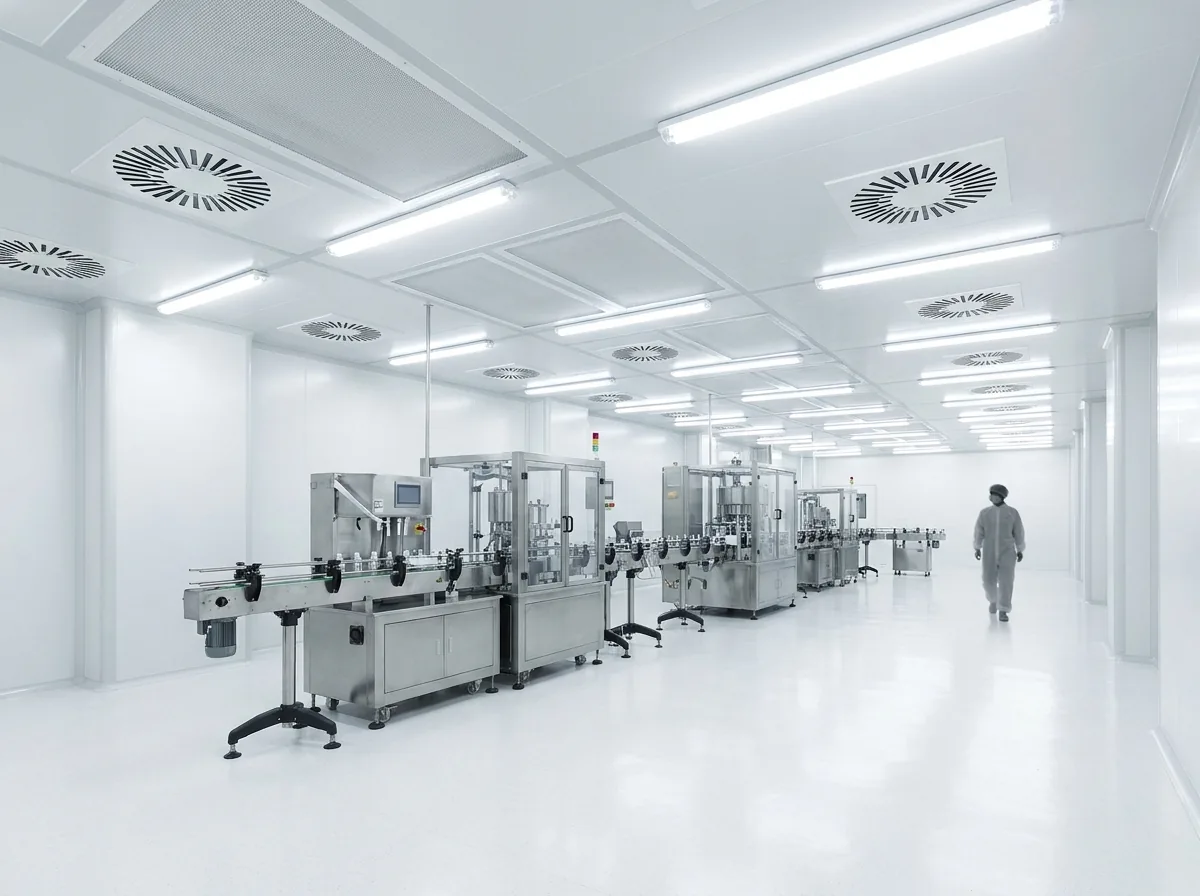
Cleanroom Interior
5,000 m² class-D cleanroom filling hall.
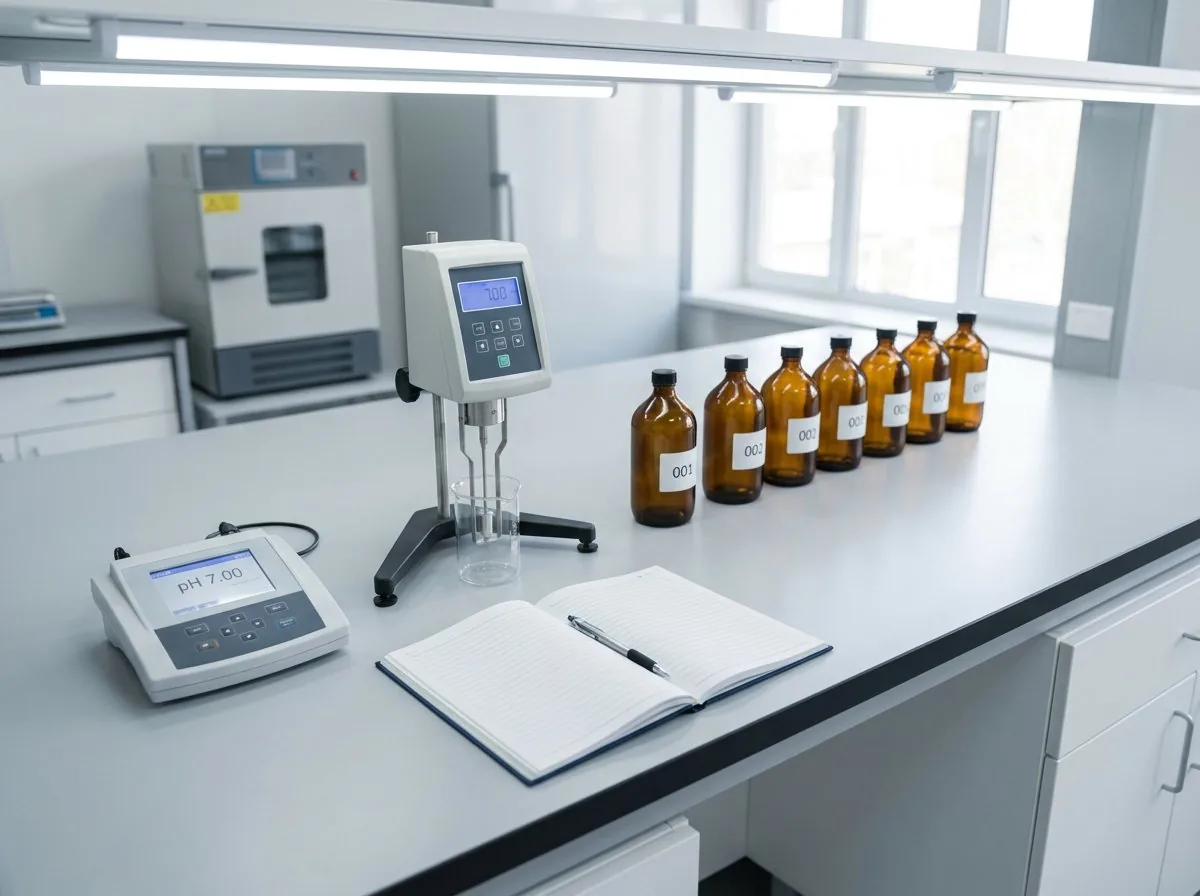
QC & Testing Laboratory
On-site lab; every batch sampled before release.
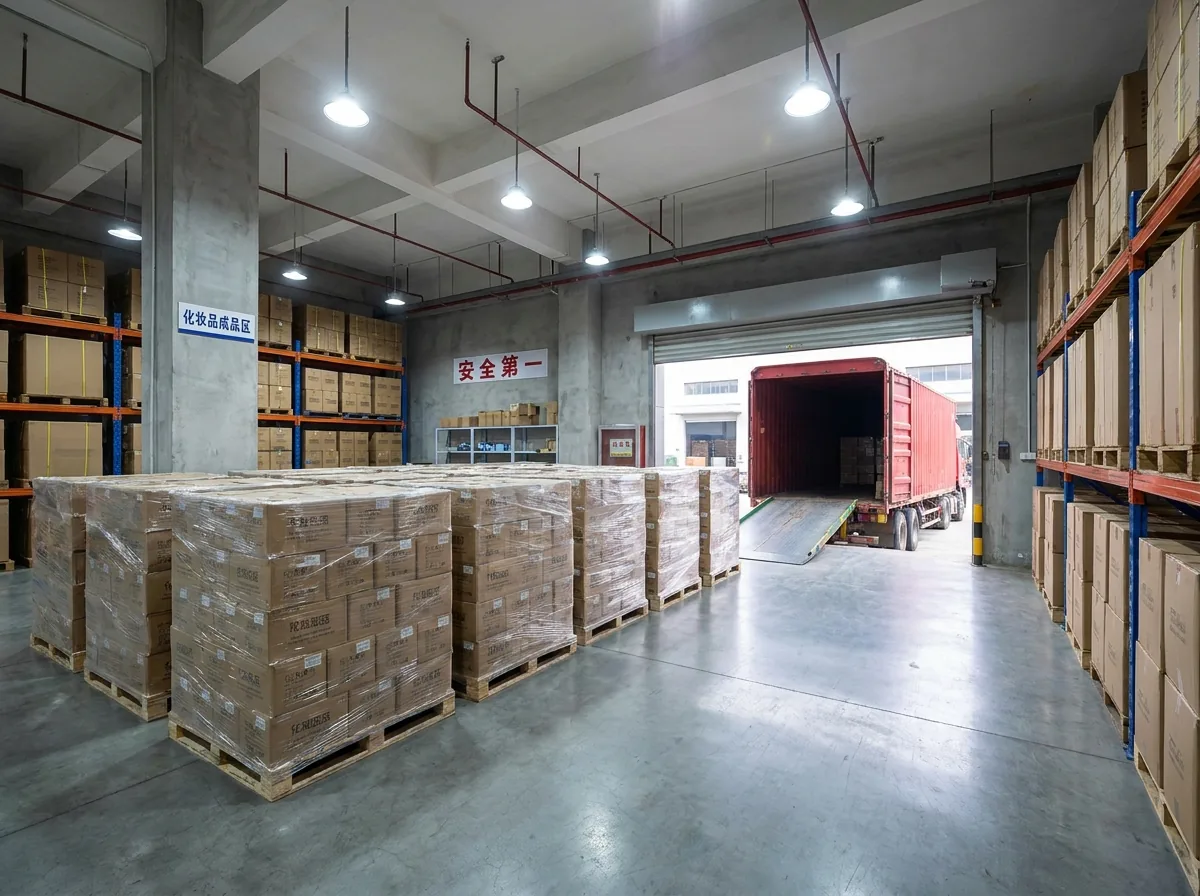
Export Logistics & Wharf Support
Container loading photographed at the export dock.
Factory FAQ
Factory FAQ
Straight answers. Where the honest answer is a limit, we state the limit.
- Can I visit your factory?
- Yes. On-site visits are welcomed, and a video audit can be arranged for buyers who cannot travel. Both are scheduled through the contact page.
- What is your monthly production capacity?
- 300,000 bottles a month across six production lines and four product lines, inside a 30,000 m² park with a 5,000 m² GMP workshop and a class-D cleanroom.
- Do you support third-party factory audit?
- Yes. A full third-party factory audit is downloadable on the certifications page under reference FM12662R01Da, alongside eleven laboratory reports.
- What certifications do you hold?
- ISO 22716 cosmetic GMP for the cleanroom lines, FDA establishment registration, and production permits for disinfectants and feed additives.
- Are you a manufacturer or a trading company?
- A manufacturer. Guangdong Shenhe Zhongke Biotechnology Co., Ltd. was founded in 2020 in Heyuan, Guangdong, and the site is a 30,000 m² industrial park with a 5,000 m² GMP workshop. We do not buy and resell, and we do not sell direct to consumers.
- How long have you been producing pet care products?
- Since 2020. ISO 22716 GMP certified, all four product lines reached commercial production in 2021, and monthly capacity reached 300,000 bottles in 2025.
- Which countries do you export to?
- Russia and the EAEU, Brazil, the European Union, the United Kingdom, the United States and Middle Eastern markets. Documentation is prepared against the requirements of the destination rather than against a single market.
- What is the difference between your stock formulas and a private label programme?
- A stock formula uses our formulation with your label, bottle and box. A private label programme can use your own formula developed through formulation, sampling, stability and filling. Both are confirmed against a specific enquiry because the lead time and the minimum depend on which one it is.
- Can you provide a sample before we order?
- Samples of any catalogue SKU are available with the shipping covered by the buyer. Custom-formula samples are scoped against the development brief. Tell us the SKU and the destination and we will send the sample plan.
- Do you hold third-party laboratory reports for the products?
- Yes. Laboratory determinations for efficacy and safety are published on the certifications page, including ammonia removal efficiency, pathogen kill rate and available chlorine stability. A full third-party factory audit report is available under its reference number.
Walk the floor, then place the order.
Visit in person or book a video audit — the same floor, the same lines, the same QC bench.